Bach Trio Sonata I, 1st movement - Lute and harpsichord; Clive Titmuss & Susan Adams
Early Music Studio
0:00 / 0:00
Bach Trio Sonata I, 1st movement - Lute and harpsichord; Clive Titmuss & Susan Adams
287 просмотров · 3 недели назад
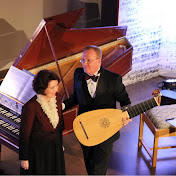
Early Music Studio
3,03 тыс. подписчиков
287 просмотров · 3 недели назад
When we first began playing lute and harpsichord together as students in the early 1970’s, this piece was one of the first that we arranged, after hearing an album recorded by Julian Bream and George Malcolm from 1969, which you may easily find on YouTube. After playing it in the original key of E-flat for years, we experimented with transposing the work up a third to G, and occasionally exchanging the parts. Later in the 18th C., long after the composition of the six organ trio sonatas, some of them were arranged for string ensembles, including arrangements by Mozart. Apparently it was common practice to play the second part an octave lower, as it is heard here played on the lute.
Bach’s Six Trio Sonatas (BWV 525–530) were composed in Leipzig around 1727–1730, like the Inventions and Sinfonias, a group conceived as pedagogical works intended for the musical education of his eldest son, Wilhelm Friedemann Bach. The Swiss musicologist Hans Georg Nägeli was the first to publish all six in 1805, a pioneering effort to rediscover Bach’s works. Since Bach was mainly known in his earliest years as an organ authority, a musician often paid to test and prove newly-built organs in Northern German states, his posthumous reputation naturally grew from that impression of his career. These Sonatas have since become some of his most-performed and heard instrumental music.
As I have observed elsewhere in my notes for Bach’s music which we perform, his reputation as an old-fashioned composer out of step with his contemporaries is again disrupted by these “modern” Sonatas. In form, they are a clever reworking of the older style of “Sonata da Chiesa” (church sonata), a four-movement work found among Italian composers (Frescobaldi, Corelli), and later their German imitators (Biber, Muffat, Telemann, et al.). By incorporating Italian concerto motifs and techniques, especially creating a new organizing principle with his bass lines, Bach made the movements longer, contrapuntally complex and engaging for the listener.
The hallmark of the trio sonata genre is its three-part texture: two independent melodic voices supported by a “functional” (a blend of harmonic and contrapuntal) bass line. While this was traditionally performed by two violins or winds and a cello or viola da gamba (with chordal continuo), Bach adapted the form for a single performer on the organ.
BWV 525 follows the standard Italian fast-slow-fast structure. Each movement shows Bach's skill in blending strict contrapuntal procedures and "galant" melodic elegance. The first movement Allegro Moderato is like a (two-part) Invention, as it relies heavily on strict imitation cycling through related keys; the two upper voices in sixteenth notes intertwine with one another over a steady pedal line in eighths.
Audio is by Chaianne Ellis at SoulTech Audio, video is by Clive Titmuss and video editing is by Susan Adams. Special thanks to Jake Swartzenburger at SoulTech Audio.
Please leave us a comment because we love to hear from you!
You might also enjoy;
Bach Trio Sonata 2nd movement • Bach Trio Sonata I, 2nd movement; Adagio -...
Bach Prelude, Fugue & Allegro • Bach; Prelude, Fugue & Allegro BWV 998 - C...
Soler Fandango • Soler Fandango; Clive Titmuss and Susan Ad...
2 Scarlatti Sonatas • Scarlatti Sonatas K.524 and K.525 - Clive ...
