Walk Alone. Rise Alone. Conquer Alone. THE WAY OF THE MACHIAVELLIAN.
Machiavelli Wise Mind
0:00 / 0:00
Walk Alone. Rise Alone. Conquer Alone. THE WAY OF THE MACHIAVELLIAN.
649 просмотров · 12 дн. назад
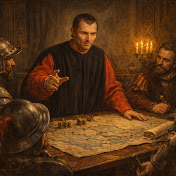
Machiavelli Wise Mind
379 подписчиков
649 просмотров · 12 дн. назад
Walk alone. Rise alone. Conquer alone.
In a world that constantly teaches you to seek approval, attention, and support from others, there is another path: learning to stand firmly on your own.
Inspired by themes from Niccolò Machiavelli's writings, this video explores solitude, independence, discipline, self-reliance, strategic silence, and the psychology of becoming less dependent on external validation.
This is not about hating people or rejecting relationships. It is about developing enough inner strength that your direction does not depend on who chooses to walk beside you.
In This Video:
Why waiting for others can keep you stuck
How solitude can strengthen self-awareness
Why you should stop explaining every move
The power of walking away without creating unnecessary conflict
How to distinguish loyalty from simple presence
Why building quietly can protect your goals
Becoming comfortable with losing people's approval
The difference between independence and isolation
How to stop living to prove people wrong
Building discipline when nobody is watching
Why your identity should not depend on other people's opinions
How to become your own source of momentum
The psychology of rising without validation
Why selective relationships are stronger than desperate dependence
The final power move: becoming capable of standing on your own
Resources & References:
Niccolò Machiavelli, The Prince — a primary source for Machiavelli's discussions of power, human behavior, fortune, preparation, and political strategy.
Niccolò Machiavelli, Discourses on the First Decade of Titus Livy — another major work that provides important context for understanding Machiavelli's broader political thought.
Stanford Encyclopedia of Philosophy, “Niccolò Machiavelli” — scholarly background on Machiavelli's life, works, concepts, and political thought.
Stanford Encyclopedia of Philosophy, “Civic Humanism” — additional historical and intellectual context surrounding Machiavelli and Renaissance political thought.
Project Gutenberg — public-domain editions of The Prince for reference and further reading.
Disclaimer:
This video is created for educational, philosophical, and self-development purposes. The ideas presented are modern interpretations inspired by Machiavelli's writings and historical context, not direct quotations or a literal representation of every aspect of his philosophy. The content is not intended as professional psychological, legal, financial, or medical advice. Viewers should use their own judgment when applying any ideas discussed.
If this message resonates with you, remember:
*You do not need everyone to walk beside you to keep moving forward.*
