HOW DID ANCIENT CHINESE KILL BOREDOM?
Ancient Chinese
0:00 / 0:00
HOW DID ANCIENT CHINESE KILL BOREDOM?
12 просмотров · 2 нед. назад
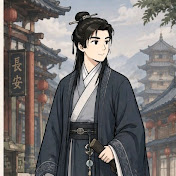
Ancient Chinese
5 подписчиков
12 просмотров · 2 нед. назад
How did ancient Chinese kill boredom?
It's the third century BCE, the day's work is finished, and you have no television, no smartphone, no internet, and nothing you absolutely need to do. This is what ancient Chinese people actually did with their evenings, and the answer is more complicated than you'd think.
Board games, music, poetry, stories, tea, gardens, competition, and long conversations. But entertainment was never the same for everyone: a farmer, a soldier, a scholar, and a palace aristocrat all had very different amounts of free time. This is ancient Chinese daily life with the romance stripped out.
Topics covered: how ancient Chinese people entertained themselves, the board games liubo and Go (weiqi), the qin and ancient Chinese music, storytelling and poetry, scholars' gardens, cuju and ancient sports, drinking culture and tea, gambling, early performance traditions, and how social class decided who had leisure.
TIMESTAMPS
0:00 — An Evening With Absolutely Nothing to Do
X:XX — The Board Game Whose Rules We Lost
X:XX — The Game Where a Battle Happens in Silence
X:XX — The Instrument a Scholar Played Alone
X:XX — The Storyteller Who Never Wrote Anything Down
X:XX — Poetry as a Competition
X:XX — The Garden That Was an Entire World
X:XX — Archery, Horses, and the Ancient Ball Game
X:XX — Drinking, Tea, and the Gambling Problem
X:XX — Watching Performers Together
X:XX — Conversation, Books, and Who Could Afford Them
X:XX — Why Ancient People Didn't Feel Bored Like We Do
X:XX — The Real Secret Behind a Good Evening
Stay to the end to find out what ancient people already knew about having a good time without technology.
#AncientChina #AncientChineseLife #QinDynasty
REFERENCES
🎲 Lien-sheng Yang (1947) — A Note on the So-called TLV Mirrors and the Game Liu-po, Harvard Journal of Asiatic Studies
⚫ Peter Shotwell (2008) — The Game of Go: Speculations on its Origins and Symbolism in Ancient China, American Go Foundation
🎵 Kenneth J. DeWoskin (1982) — A Song for One or Two: Music and the Concept of Art in Early China, University of Michigan
🍵 Lu Yu — The Classic of Tea (Chajing), translated by Francis Ross Carpenter (1974)
🏛️ Mark Edward Lewis (2007) — The Early Chinese Empires: Qin and Han, Harvard University Press
Disclaimer
The content on Ancient Chinese is created for educational and informational purposes only. While every effort is made to present historically and archaeologically accurate information, some topics may be simplified, interpreted, or presented in a storytelling format to make them more engaging and accessible. Ancient history and prehistory are complex fields that continue to evolve as new discoveries and research emerge. Many events, cultures, and timelines discussed on this channel are based on current theories, interpretations, and available evidence, which may differ among historians, archaeologists, and researchers. Ancient Chinese does not claim to provide professional academic, archaeological, or scholarly advice. Viewers are encouraged to explore primary sources, academic publications, and expert research for deeper study and a broader understanding of the topics covered. The content on this channel is intended for general knowledge, curiosity, and entertainment purposes. By watching these videos, you acknowledge that historical interpretations may vary and that the channel's goal is to inspire interest in humanity's ancient past.
