Alaska Flight 261: The Wear Check Was Due After the Crash
The Failure Diagram
0:00 / 0:00
Alaska Flight 261: The Wear Check Was Due After the Crash
12 просмотров · 13 дн. назад
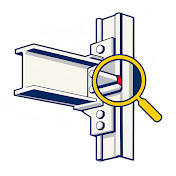
The Failure Diagram
1 подписчик
12 просмотров · 13 дн. назад
Investigators found fragments of the acme nut's threads wrapped around the recovered jackscrew. The next regular end-play inspection was scheduled for March 2000. Alaska Airlines Flight 261 crashed on January 31, 2000.
This investigation follows the recovered hardware, insufficient lubrication at the working threads, the extended maintenance intervals, and the loss of the stabilizer's intended support path. The NTSB also found that the dual-thread design was not redundant against wear. The investigation does not reduce the accident to one person or one decision. All 88 people on board died.
The photographs show parts after recovery, not the accident flight. Engineering diagrams explain the mechanism; the NTSB animation is a reconstruction, not actual footage or a time-scaled replay. Narration uses a synthetic voice.
00:00 Recovered thread remnants
01:05 What held the stabilizer
02:15 The worn nut threads
03:21 Where lubrication was missing
04:47 Comparing the accident nut
05:48 The inspection interval
07:06 Two threads, one wear path
08:02 Temporary restraint and final failure
08:38 The FAA response
09:17 How the two chains met
Primary sources:
NTSB, Aircraft Accident Report AAR-02/01: https://www.ntsb.gov/investigations/A...
NTSB Materials Laboratory Factual Report 00-145 (post-recovery photographs): https://data.ntsb.gov/Docket/Document...
FAA, Airworthiness Directive 2000-15-15: https://www.govinfo.gov/content/pkg/F...
NTSB jackscrew photograph: https://commons.wikimedia.org/wiki/Fi...
NTSB explanatory animation: https://commons.wikimedia.org/wiki/Fi...
U.S. Navy search-preparation photograph: https://commons.wikimedia.org/wiki/Fi...
U.S. Navy recorder-recovery photograph: https://commons.wikimedia.org/wiki/Fi...
