Bach: Prelude and Fugue in e, BWV 879 (D. Jacques Way Harpsichord)
Craig Williams, Organist
0:00 / 0:00
Bach: Prelude and Fugue in e, BWV 879 (D. Jacques Way Harpsichord)
36 просмотров · 3 часа назад
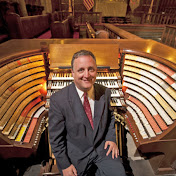
Craig Williams, Organist
3,21 тыс. подписчиков
36 просмотров · 3 часа назад
Craig Williams plays the tenth prelude and fugue in Johann Sebastian Bach's Well-Tempered Clavier, Volume II. Volume II was composed and assembled 20 years after the first set, in 1742 while he was at Leipzig. With the later set is seen many more preludes which resemble dance or sonata movements, divided into two repeating sections. This prelude is a two-part invention structured like a sonata movement, with shifts from the original key of e minor to sections in the relative major and finally modulating to b minor, the fifth of the original tonic. With a passage in the left hand, the repeat easily returns to the opening in the original key. The second large section begins in b and develops the imitative ideas further, exploring different key centers and variations on the figurations used in the first section. One of the ideas which ties both sections together is when he arrives at a sequence in one hand played by a long trill in the other and then trading the parts. This happens in both sections though in different keys. The final arrival in the second section leads to an extension built on a deceptive cadence which then comes to a satisfying conclusion. One way to create variety is by playing on the lower manual of the harpsichord and then taking the repeats on the upper manual. The fugue is in 2/2 time exploring various triplet and quadruplet subdivisions within the larger framework of the half-note beats. Beginning on triplets, the long subject moves to dotted rhythms and then back into extended triplet patterns before the alto answer arrives six measures later! The fugue is in three voices, though the various rhythmic sub-divisions played against each other give the piece a sonic complexity which belies the presence of only three parts. The long form of the fugue, a natural extension of the long subject, comes to its conclusion only after two cadenza-like full stops, the second marked by a fermata. In the final chords, Bach shows his mastery of creating full sonorities on the harpsichord.
#bach
#baroquemusic
#harpsichord
#welltemperedclavier
0:00 Prelude
5:55 Fugue
