Scylla — Before My Name Meant Fear | Dark Epic Greek Myth Song
TokikoReich2026
0:00 / 0:00
Scylla — Before My Name Meant Fear | Dark Epic Greek Myth Song
142 просмотра · 7 дней назад
TokikoReich2026
107 подписчиков
142 просмотра · 7 дней назад
🌊 SCYLLA — BEFORE MY NAME MEANT FEAR 🌊
“They made a monster of my body,
then made a warning of my name.”
Before Scylla became one of the most feared creatures in Greek mythology, her name belonged to a girl.
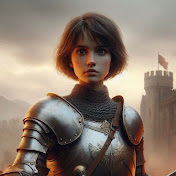
This original 7-minute-and-51-second dark epic cinematic tragic song retells the myth of Scylla in the first person—not only as the monster whom sailors feared, but as the young woman whose body was transformed while her human heart remained trapped inside it.
In Homer’s Odyssey, Scylla dwells in a dark cave high in a cliff, directly across the narrow strait from Charybdis. She has twelve feet and six long necks, each ending in a terrifying head with three rows of teeth. Circe warns Odysseus that Charybdis may swallow his entire ship, while Scylla will seize six men—one with each head. Odysseus sails closer to Scylla’s side, and six of his strongest companions are taken from the deck as they cry out to him.
For this video’s visual interpretation, however, Scylla’s lower body is portrayed in a form familiar from many later artistic depictions: as a great fish-like sea-serpent tail, rather than with Homer’s twelve separate feet.
Homer presents Scylla as an immortal monster and does not tell the story of a beautiful maiden transformed by jealousy. That origin developed in later Greco-Roman tradition and is told most memorably in Ovid’s Metamorphoses.
In Ovid’s version, Scylla is a beautiful young woman loved by the sea god Glaucus. Frightened by his strange transformed appearance, she flees and does not return his love. Glaucus then asks Circe to use her herbs and spells so that Scylla will share his desire. But Circe herself falls in love with Glaucus. When he rejects her, she turns her anger toward the innocent girl he prefers.
Circe poisons the quiet cove where Scylla likes to bathe. Scylla enters the water without knowing what has been done. Barking monsters rise around her waist. At first she believes that they are separate creatures, so she pushes them away and tries to escape—but everything she flees moves with her. When she reaches for her thighs, legs and feet, she finds only savage jaws.
Calling Circe a “goddess” in this song is deliberate. In Homer, she is not merely a mortal witch: she is the divine daughter of Helios, the sun god, and the Oceanid Perse, a goddess who commands powerful herbs and enchantments. Ovid likewise explicitly calls her a goddess and daughter of the Sun. That is the background of the lyric:
“I did not know that my refusal
would bring a goddess down on me.”
The ancient poems tell us what Scylla became, but they rarely ask what remained within her. This song imagines that the girl’s consciousness survived inside the cursed body. It does not forget the sailors who died in her six mouths; instead, it asks whether those hungers truly belonged to her—or whether she was imprisoned inside them too.
“Did they belong to me at last,
or was I trapped inside of them?
When sailors died between their teeth,
what part of me was dying then?”
Sailors passed her cliff and cried “Scylla!” like a curse. No one asked who she had been before the teeth, before the thirst. Yet Scylla had always been her name: a name her mother once spoke with love before generations of sailors made it mean fear.
This is not a song about defeating a monster. It is a song about listening for the lost voice of the girl inside one.
“Scylla was the name my mother gave me,
before the sailors made it mean fear.
Say it once the way she said it—
soft enough that I can hear.”
If you love Greek mythology, Homer’s Odyssey, Ovid’s Metamorphoses, tragic feminine retellings, dark cinematic music and forgotten voices from the ancient world, I hope you will stay and listen to Scylla’s story until the final whisper.
Scylla…
Not a warning.
Not a curse.
My name.
Thank you for listening. May her name be spoken gently again. 🌊
#Scylla #GreekMythology #EpicCinematicMusic
