Dr. K. J. Yesudas Live | Sri Ramanavami Music Festival, Mysore 2000 | Full Carnatic Concert – Part 1
Classical Wizard-YESUDAS
0:00 / 0:00
Dr. K. J. Yesudas Live | Sri Ramanavami Music Festival, Mysore 2000 | Full Carnatic Concert – Part 1
2 139 просмотров · 1 дн. назад
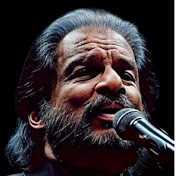
Classical Wizard-YESUDAS
5,75 тыс. подписчиков
2 139 просмотров · 1 дн. назад
There are concerts one remembers for their repertoire, others for their virtuosity, and a precious few because, for several enchanted hours, they seem to abolish the distance between artist and audience, music and devotion, performer and prayer.
This remarkable concert by Dr. K. J. Yesudas, presented at the Sri Ramanavami Music Festival in Mysore on April 19, 2000, belongs unmistakably to that last category.
This upload is Part 1 of a three-part presentation of the full-length concert—an evening in which Yesudas does not merely sing before an audience; he converses with them, listens to their requests, responds with warmth, and gradually draws the entire gathering into that ineffable realm where the clamour of ordinary life recedes and, for a while, only music seems to exist.
Accompanying him are:
Sri Ramanavami Music Festival, Mysore 2000
Mysore Nagaraj -Violin
T. A. S. Mani – Mridangam
Shivaramakrishnan – Ghatam
🎼 PART 1 – TRACKLIST
1. Sarasijanabha – Varnam
Raga: Nata | Tala: Adi
Traditionally circulated under Swathi Tirunal's name; scholarship also attributes this Nata varnam to Parameswara Bhagavatar of his court.
2. Rama Nama Payasakke
Raga in this concert: Pantuvarali | Composer: Purandara Dasa
The composition is commonly catalogued in other musical settings, including Anandabhairavi–Rupaka; this concert presents it in Pantuvarali.
3. Pavanaguru
Raga: Hamsanandi | Tala: Rupaka
Composer: Lalita Dasar
4. Tirupati Venkataramana
Raga: Keeravani
Composer: Purandara Dasa
5. Ksheera Sagara Sayana
Raga: Devagandhari | Tala: Adi (2-kalai)
Composer: Saint Tyagaraja
The programme begins with the stately brightness of Nata, immediately establishing the classical temper of the evening. From there, the music journeys into the profound contours of Pantuvarali, before the luminous, emotionally charged beauty of Hamsanandi emerges through Pavanaguru. The concluding selection of this part, Ksheera Sagara Sayana, enters the devotional repose of Devagandhari, bringing an entirely different shade of musical contemplation.
Yet a tracklist can tell us only what was sung. It cannot adequately describe what happened between the notes.
That is where Yesudas becomes extraordinary.
His voice possesses sweetness without fragility and authority without ostentation. A phrase may begin almost conversationally, acquire colour through an exquisitely placed gamaka, rise with astonishing assurance and finally settle upon the sruti with an inevitability that makes one wonder whether the note was discovered—or whether it had simply been waiting for his voice.
Admirers have described him as “a university of ragas,” and performances such as this explain why. His command of Carnatic music is not displayed as scholarship for its own sake; knowledge has been absorbed so completely that technique becomes expression.
The notes appear to bend, glide and blossom around his voice, acquiring that unmistakable musical signature which listeners recognise within moments.
But perhaps the greatest charm of a live Yesudas concert lies in something beyond vocal accomplishment.
There is communication.
He acknowledges the listeners. He hears their requests. There is spontaneity, humour, affection and the exhilarating uncertainty of live music. The invisible wall between stage and auditorium begins to disappear, until singer, accompanists and audience seem participants in the same musical conversation.
And then comes that rare transformation.
A concert hall ceases to feel like a hall.
Time becomes strangely irrelevant.
One raga opens into another emotional landscape; one sangati makes us anticipate the next; the violin answers the voice, percussion gathers and releases rhythmic energy—and the listener is transported into a world where, momentarily, music alone appears sufficient.
Revered globally as the Celestial Singer, K. J. Yesudas possesses a divine voice that has brought spiritual solace, emotional depth and joy to millions of listeners across generations and languages for over six decades.
This 2000 Mysore concert captures not merely the celebrated singer, but the living Carnatic musician—searching, responding, improvising and communicating directly with those fortunate enough to be present.
🎧 Part 1 of a three-part series.
Parts 2 and 3 continue this extraordinary musical journey through the complete concert.
🙏 Listen without hurry. Let the ragas reveal themselves. And for a little while, allow the world outside to wait.
HASHTAGS
#KJYesudas #DrKJYesudas #Yesudas #YesudasLive #YesudasConcert #SriRamanavami #RamanavamiMusicFestival #Mysore #CarnaticMusic #CarnaticConcert #IndianClassicalMusic #ClassicalMusic #CarnaticVocal #Sarasijanabha #Nata #RamaNamaPayasakke #Pantuvarali #PurandaraDasa #Pavanaguru #Hamsanandi #KsheeraSagara #Devagandhari #Tyagaraja #MysoreNagaraj #RareConcert #LiveConcert #CelestialSinger #Raga #IndianMusic
