Three Neighbours Walked Into A Dead Widow's House In 1687 And Wrote Down Everything
Before The Great Men
0:00 / 0:00
Three Neighbours Walked Into A Dead Widow's House In 1687 And Wrote Down Everything
55 просмотров · 12 дней назад
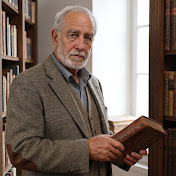
Before The Great Men
5 подписчиков
55 просмотров · 12 дней назад
On a specific afternoon in late autumn of 1687, in a modest English market town, three men walked into the empty kitchen of a woman who had died the week before. She was a widow. Her body was already in the churchyard, and her house was quiet. And these three men had come to write down everything she had owned.
We look at:
How a seventeenth-century probate inventory was made, and why neighbours (not officials) valued the goods
The Hall: the great pot, the settle by the fire, the pewter on the cupboard shelf as a savings account made visible
The Kitchen or Buttery: the brewing barrels, the salted bacon hanging from the beams, the year's food security overhead
The Parlour: the mirror, the turkey-work chairs, the small chest with the ready coin
What £3 in silver actually meant in an ordinary middling household in 1687
The Great Rebuilding: how the widow's staircase itself was a piece of seventeenth-century respectability
The best chamber and the master bed — often the most expensive single item in the entire house
The christening gown at the bottom of the chest, valued at sixpence, worth incalculably more
What the inventory cannot tell us: the widow's memories, her losses, her forty years of daily labour
The Yard: four hens, a kitchen garden of medicinal herbs, the pig that fed the family for a year
The widow's will and the specific bequests: my mother's spoons, my late husband's Bible, my christening gown
What £32 4s 8d actually meant in the middling economy of late Stuart England
The three appraisers signing at the bottom — one hand, two marks — and the community that produced the document
Every claim in this video is drawn from documented archaeological, legal, and social-historical sources listed below.
CHAPTERS
00:00 The door of a dead widow's house
03:41 Who this widow was, and why we can know her
07:03 How an inventory was actually made
10:44 The Hall: the heart of the house
15:19 The Hall: furniture and the place of bodies
19:39 First peak: the pewter on the shelf
23:26 The Kitchen: food, drink, and storage
27:26 The Parlour: the best room
31:26 The money in the house
34:41 The staircase, and what upstairs meant
38:03 The best chamber: the bed and the linen
42:20 Second peak: what the inventory does not say
46:15 The second chamber, and who had slept there
50:36 The Yard, the hens, and the garden
54:34 Third peak: the working life of the hands
58:23 What she had bequeathed
62:11 What £32 actually meant
64:32 The appraisers' names, and the community of witnesses
68:35 Fourth peak: why one life matters
71:41 The ordinary past preserved by accident
PRIMARY SOURCES AND FURTHER READING
The Probate Inventories of Sarah De Morais and other seventeenth-century Londoners — Institute of Historical Research library collection: blog.history.ac.uk/2018/02/home-in-the-ihr-library-inventories-in-the-library-collection/
"'Orderly made': re-appraising household inventories in seventeenth-century England" — Journal, Cambridge University Press: tandfonline.com/doi/full/10.1080/03071022.2016.1215101
Melvyn Jones, "A true and perfect inventory: A Yorkshire yeoman's probate": thegenealogist.co.uk/featuredarticles/discover-your-ancestors/periodical/29/a-true-and-perfect-inventory-5051/
The probate inventories of the Watson family (1704 and 1729): oldnallend.uk/2023/12/04/the-joy-of-probate-inventories/
"Inventory of an Eighteenth Century Widow: Mary Stanton of Appleby, 1742": elizabethi.org/contents/essays/roberts/fash.html
"The History of Ilmington" — Wills and inventories of the 17th and 18th centuries: ilmington2020vision.co.uk/historyofilmingtonchapter6
Shakespeare's inventory and 16th-17th century goods and chattels (Shakespeare Birthplace Trust): shakespeare.org.uk/explore-shakespeare/blogs/inventory-goods-and-chattels/
"Wills through the centuries" — Historic Droitwich: historicdroitwich.org.uk/people/wills/wills-through-the-centuries.php
W.G. Hoskins, "The Rebuilding of Rural England, 1570–1640" — foundational essay on the Great Rebuilding: jstor.org/stable/650183
Lorna Weatherill, Consumer Behaviour and Material Culture in Britain, 1660–1760 (Routledge): routledge.com/Consumer-Behaviour-and-Material-Culture-in-Britain-1660-1760/Weatherill/p/book/9780415137201
Craig Muldrew, Food, Energy and the Creation of Industriousness (Cambridge): cambridge.org/core/books/food-energy-and-the-creation-ofindustriousness/E5A9C40F79BE43F3F1B9CFD0BDAD5A67
If you value slow, documented history about the ordinary people who kept the past running — subscribe to Before The Great Men. New investigations every Wednesday and Saturday.
Thomas Ashcroft is a narrative persona voiced through AI. All historical content is drawn from documented primary sources listed above. Some information from public sources may not be fully verified.
