Zelenka - Missa Purificationis, ZWV 16
ZelenkaGeru
0:00 / 0:00
Zelenka - Missa Purificationis, ZWV 16
3 307 просмотров · 1 год назад
ZelenkaGeru
2,95 тыс. подписчиков
3 307 просмотров · 1 год назад
#jan #dismas #zelenka #score #sheetmusic #zwv #16
Score / sheet music to Zelenka's Missa "Purificationis" for the Blessed Mary Virgin, in Latin: Beatae Virginis Mariae. This work is ZWV number 16.
The Missa Purificationis Beatae Virginis Mariae, or „Our Lady´s Purification“ mass was composed in August 1733 in an incredibly short period of a mere ten days. Its dedication is obvious from the composer´s remarks in the score: it was composed "on the occasion of, by the grace of God, our noblest Princess Elector´s happily accomplished delivery ..." Hence, the mass was not primarily intended for the day of Virgin Mary´s Purification /February 2nd/ but to mark the Queen´s first visit to the church after giving birth to a son. To go by the laconic record in the diary of the Dresden Jesuit mission, this happened on Sunday, August 23rd, when Zelenka´s mass appears to have had its first performance. It is a solemn mass with grand instrumentation comprising an ensemble of four trumpets and kettledrums, oboes and flutes. In accordance with period usage, the mass was conceived as a Proper parts or cantata mass, meaning that each section of the text was musicalized as an independent part. Moreover, the ideal of a "mixed church style" resulted in the alternation of a variety of modes of musicalization from concertant choirs, to choir fugues, counterpoint movements in the stile antico right up to arias or ensembles.
Compared with Zelenka´s subsequent church compositions, this is a relatively short composition, which - apart from purely practical liturgical reasons - may also be put down to the haste marking its genesis. It is obviously in this sense that the Kyrie eleison da Capo repetition should be understood. Unusual sparseness also marks the Credo conceived here as a single well composed movement with certain parts of the text /such as "et incarnatus", "crucifixus" or "mortuorum"/ highlighted by tempo or texture changes. Similarly, the absence of trumpets in the instrumentation suggests that some earlier composition may have been inserted in place of the Credo. In no case, however, did Zelenka allow haste to impair his characteristic musical diction abounding with astonishing harmony, refined counterpoint, stark contrasts and breath-taking ritornelli. As a rule, period composers would use similar means to treat a number of places in the text of the Proper of the Mass set to music countless times before - Zelenka, too, resorted to tradition in setting to music, for instance, the part Christe eleison as a duet of two sopranos. In contrast, what comes as unusual is the literal use of the fugue Cum Sancto Spiritu from the end of Gloria as Osanna closing the Sanctus part. The whole mass comes to an end with a double fugue /Dona nobis pacem/, with its first theme referring to Kyrie and thus accentuating the conciseness of the whole work.
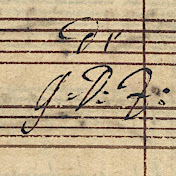
NB: The Gloria-Cum Sancto Spiritu are written in the hand of one of Zelenka's copyists, though most likely not Philipp Troyer, and the autograph returns in Zelenka's hand from the Credo onwards to the concluding "Dona nobis pacem".
I: Kyrie (Chorus) - 00:00
II: Christe (Soprano I, II) - 2:02
III: Kyrie da capo (Chorus) - 6:29
IV: Gloria (Chorus) - 8:32
V: Gratias (Soprano) - 11:22
VI: Qui tollis (Chorus, Fugue) - 15:40
VII: Qui sedes (Chorus) - 17:34
VIII: Quoniam (Chorus, Tenor, Bass) - 18:45
IX: Cum Sancto Spiritu (Chorus, Fugue) - 21:08
X: Credo (Chorus) - 23:05
XI: Et incarnatus est (Soprano, Alto, Tenor) - 24:36
XII: Crucifixus (Tenor, Bass) - 25:51
XIII: Et resurrexit (Chorus) - 26:28
XIV: Sanctus (Chorus) - 29:01
XV: Benedictus (Soprano, Alto, Bass) - 30:15
XVI: Osanna (Chorus, Fugue) - 31:35
XVII: Agnus Dei I (Alto) - 33:30
XVIII: Agnus Dei II (Chorus) - 37:30
XIX: Dona nobis pacem (Chorus, Fugue) - 37:52
Performer(s): • Missa purificationis beatae virginis Maria...
