Mozart/Overture to "Lo sposo deluso",K.430(Coda completed by Hummel Note) - ( NotePerformer 5 )
Hummel Note
0:00 / 0:00
Mozart/Overture to "Lo sposo deluso",K.430(Coda completed by Hummel Note) - ( NotePerformer 5 )
138 просмотров · 13 дней назад
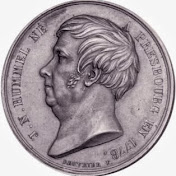
Hummel Note
783 подписчика
138 просмотров · 13 дней назад
【DTM】モーツァルト/歌劇『騙された花婿(未完)』K.430 -序曲
(コーダ補筆:フンメルノート)
Programming Music
W.A. Mozart – Overture to Lo sposo deluso,K.430
(Coda completed by Hummel Note)
Programed by Hummel Note
Daw&Sequencer:DoricoPro
Sounds:NotePerformer
Thumbnail images are generated by Google AI,ChatGPT & CyberLink PowerDirector
The score in the video is the playback screen of PC. This is different from the original score.
Because I use it as a MIDI data input software and not for typing in sheet music, I place more emphasis on making the dynamics and tempo instructions sound as natural as possible, rather than composing exactly as written.
"The Deluded Bridegroom"? Did Mozart really write an opera with such a title?
That is probably the reaction of many listeners.
Lo sposo deluso ("The Deluded Bridegroom") is an unfinished opera buffa that Mozart began composing in the latter half of 1783, when he was 27 years old. At this point in his career, Mozart was eager to establish himself as an opera composer and was actively searching for suitable librettos through his many theatrical connections.
The story centers on the wealthy but gullible old man Bocconio—the "deluded bridegroom"—who hopes to marry the young Roman noblewoman Eugenia. Unfortunately for him, Eugenia is already in love with Don Asdrubale. Through a series of comic deceptions and clever schemes, the old man is thoroughly outwitted, allowing the young lovers to be united in the end—a classic opera buffa plot.
Although Mozart began the work enthusiastically, he abandoned it halfway through Act I. The exact reason remains uncertain, but scholars generally believe he became dissatisfied with the libretto or shifted his attention to more promising theatrical projects that would eventually lead to masterpieces such as Le nozze di Figaro (The Marriage of Figaro).
Only five musical numbers survive: the overture, a quartet, two incomplete arias, and a trio. Despite its fragmentary state, the music is remarkably attractive and already reveals many of the dramatic qualities that would later flourish in Figaro. I have especially loved the brilliant overture, with its festive opening fanfare, for many years, so I decided to create this performance.
About the Overture
The overture, in D major (Allegro – Andante), is bright, energetic, and full of theatrical vitality. It opens with a trumpet fanfare—not military in character, but more like the joyful raising of the curtain for a lively comedy.
Its most distinctive feature is that it does not conclude on its own. Instead, it flows seamlessly into the opening quartet ("Ah, che ridere!"). The lively Allegro gradually gives way to a gentle Andante, which then hands the music directly to the singers. This uninterrupted transition anticipates the highly theatrical techniques Mozart would later employ in Don Giovanni and Così fan tutte.
Today, the overture is almost never performed as an independent concert piece.
For this recording, I have made a small editorial addition. After the Andante, I return to the opening fanfare and add a brief Allegro coda, creating a traditional fast–slow–fast overture form so that the piece can stand on its own in concert performance.
Mozart's Unfinished Operas
Although Mozart composed many of the greatest operas in history, he also left several unfinished stage works. Only three of these survive in a form substantial enough to be performed today:
L'oca del Cairo ("The Goose of Cairo"), K. 422
Another opera buffa composed around the same time (1783), this work tells the extraordinary story of a lover who hides inside a gigantic mechanical goose in order to rescue his beloved. Like Lo sposo deluso, it was abandoned, probably because of problems with the libretto.
Zaide, K. 344
Composed between 1779 and 1780, Zaide is a German Singspiel set in a Turkish palace. It is widely regarded as the direct precursor to Mozart's later success Die Entführung aus dem Serail (The Abduction from the Seraglio). More than half of the opera survives, and because of its substantial musical content, it has often been completed or adapted for modern stage performances.
Interestingly, neither Zaide nor L'oca del Cairo has an overture, making Lo sposo deluso the only one of Mozart's unfinished operas to include one.
With the exception of Zaide, these unfinished works are rarely performed or recorded. Nevertheless, because they are by Mozart, several excellent recordings do exist.
By presenting this overture as an independent concert work, I hope to introduce more listeners to one of the hidden gems among Mozart's unfinished masterpieces.
https://note.com/hummelnote
https://hummelnote.wixsite.com/hummel...
http://hummelnote.doorblog.jp
