What Happened When You Got Sick in Ancient Egypt?
Phares Discovery
0:00 / 0:00
What Happened When You Got Sick in Ancient Egypt?
43 просмотра · 1 день назад
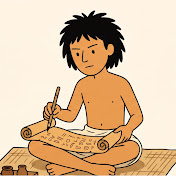
Phares Discovery
37 подписчиков
43 просмотра · 1 день назад
You wake up with a fever. Your stomach is twisting. There’s no pharmacy, no antibiotics, and no one knows that bacteria exist. So what actually happened when you got sick in ancient Egypt?
The answer is stranger than you think, and part of it still works today.
In this video we walk through a sick day in ancient Egypt, from the first fever to the doctor at your bedside:
Why life expectancy was about 30, and what that number really hides.
Why Egypt ran something close to a modern hospital system, with specialist doctors for eyes, teeth, stomachs and more.
The royal doctor whose real title, carved into his tomb, was “Keeper of the Royal Rectum”.
How the swnw (the Egyptian physician) examined you: pulse, swelling, questions, and one of three written verdicts.
The verdict nobody wanted to hear, “an ailment not to be treated,” and why it was an early form of medical honesty.
Trauma medicine that was almost pure science: splints, fresh meat on a wound, and honey dressings.
The Edwin Smith Papyrus, a surgical manual copied around 1600 BC
What was really likely to kill you: bread and beer, grit in the flour, and dental disease.
Tutankhamun, and what modern DNA analysis found in the most famous mummy on Earth.
Imhotep, the healer who became a god.
Whether you take a painkiller without thinking or just wonder how people survived 3,000 years without one, this is what medicine looked like before anyone knew what a germ was.
If you enjoyed this, kindly subscribe.
#Egypt #Tutankhamun #Imhotep #Mummies #HistoryExplained #AncientHistory
SOURCES
Herodotus on Egypt's specialist physicians (eye doctors, teeth doctors, stomach doctors, "others of the more obscure ailments") — Histories, Book 2.84:
https://cts.perseids.org/read/greekLit/tlg...
"Keeper of the Royal Rectum" — the real ancient Egyptian medical title and the tomb it comes from:
https://hekint.org/2023/09/28/pharaohs-pro...
The Edwin Smith Papyrus — the ~1600 BC trauma-surgery manual with its three diagnostic verdicts ("an ailment I will treat," "an ailment I will contend with," "an ailment not to be treated"):
https://en.wikipedia.org/wiki/Edwin_Smith_...
The Ebers Papyrus and Egyptian medical texts — "magic is effective together with medicine," plus the juniper/honey/beer remedies and incantations:
https://www.worldhistory.org/article/51/eg...
Honey as a wound dressing — antibacterial, hygroscopic properties and its ancient origins as "the oldest wound dressing material known to human":
https://pmc.ncbi.nlm.nih.gov/articles/PMC3...
The embalming process — organ removal, the hooked instrument through the nostril, canopic jars:
https://www.thecollector.com/how-egyptian-...
Dental disease in Egyptian mummies — sand/grit in ground bread, worn teeth, abscesses:
https://www.drbicuspid.com/home/article/15...
2010 Hawass et al. DNA study on the royal mummies, Tutankhamun included — Plasmodium falciparum malaria and degenerative bone disease (originally published in JAMA, Feb 2010):
https://www.scientificamerican.com/article...
Imhotep — the mortal healer later worshipped as a god of medicine, folded into the Greek god Asclepius:
https://www.worldhistory.org/Imhotep/
